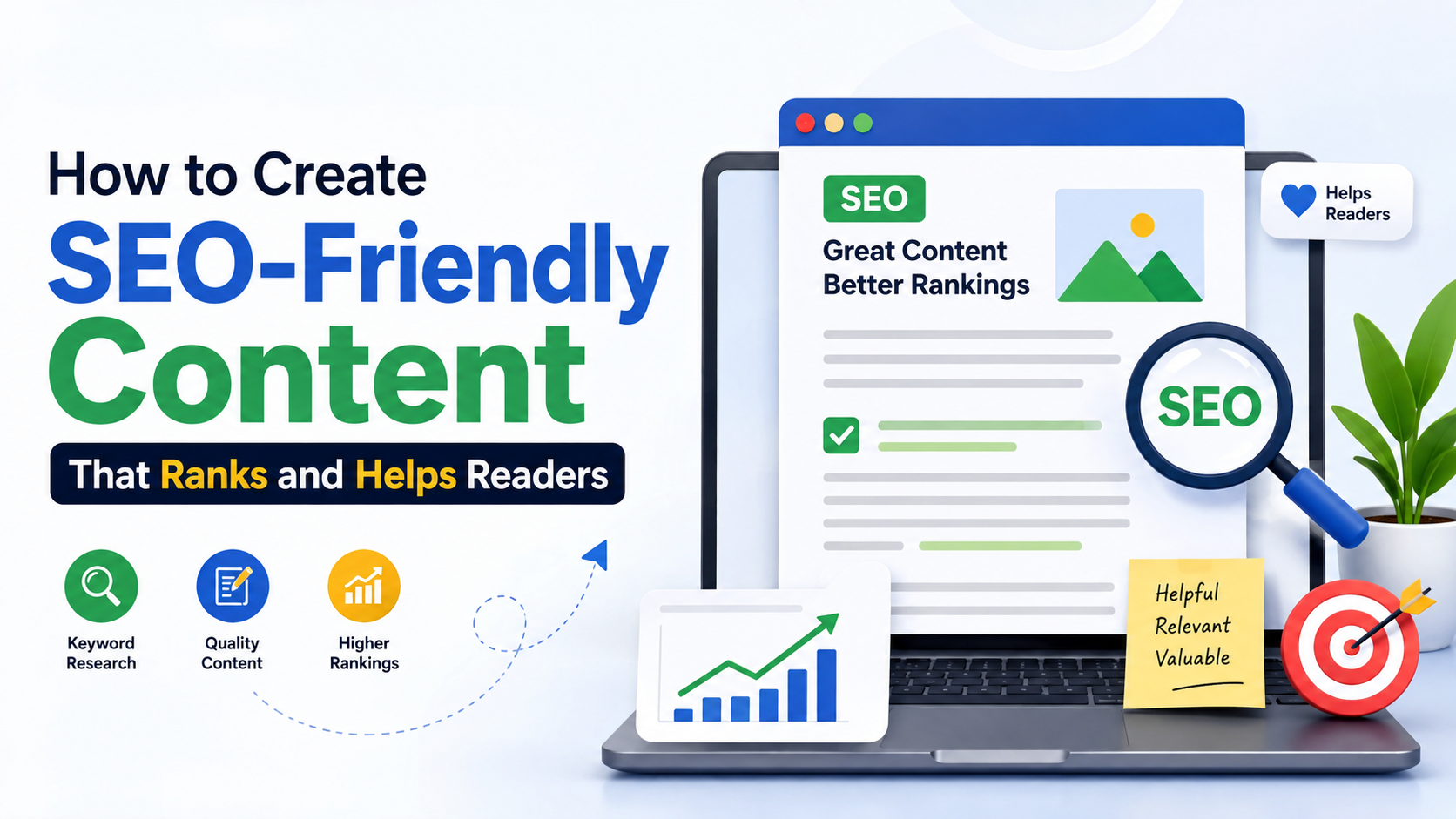
How to Create SEO-Friendly Content That Ranks and Helps Readers | C2D
Learn how to create SEO-friendly content that helps readers and search engines, from search intent and keywords to headings, internal links, readability, and content optimization with C2D.
How to Create SEO-Friendly Content That Ranks and Helps Readers
Creating content for a business website is not simply about writing an article and publishing it.
Good website content should answer questions, solve problems, provide useful information, and help visitors understand what your business offers.
At the same time, your content should be structured clearly so that search engines can understand its topic and relevance.
This is where SEO-friendly content becomes important.
At C2D (Concept to Deploy), we believe effective SEO content should be created for people first and optimized for search engines without sacrificing clarity or usefulness.
In this guide, we'll explain what SEO-friendly content means and how businesses can create content that is useful for readers while supporting organic search visibility.
What Is SEO-Friendly Content?
SEO-friendly content is content that is created to be useful and accessible to people while also being structured in a way that helps search engines understand the subject.
It can include:
- Blog articles
- Service pages
- Product pages
- Guides
- FAQs
- Landing pages
- Case studies
SEO-friendly content does not mean filling a page with keywords.
Instead, it means understanding what people are looking for, providing a useful answer, organizing the information clearly, and making the page easy to navigate.
Why Does SEO-Friendly Content Matter?
Search engines help people discover information from millions of websites.
If your content clearly explains a topic and matches what people are looking for, it has an opportunity to appear for relevant searches.
Good content can help businesses:
- Attract relevant website visitors
- Answer customer questions
- Build trust
- Support search visibility
- Generate enquiries
- Explain products and services
- Support other marketing channels
However, search visibility should not be the only goal. The visitor should be able to find genuine value after clicking the result.
Start With Search Intent
One of the most important parts of creating SEO-friendly content is understanding search intent.
Search intent is the reason behind a person's search.
For example, someone searching for:
what is SEO
is probably looking for an explanation.
Someone searching for:
website development company in Trichy
may be looking for a service provider.
Someone searching for:
website development cost
may be researching pricing before making a decision.
Your content should match the purpose behind the search.
Understand Your Target Audience
Before writing, identify who the content is intended for.
Think about:
- Who are they?
- What problem are they trying to solve?
- What questions do they have?
- What level of knowledge do they have?
- What action might they take after reading?
A beginner may need a simple explanation, while an experienced professional may want technical details.
Understanding the reader helps you choose the right language, structure, examples, and depth.
Choose a Primary Topic
Every article should have a clear main topic.
For example, instead of creating a general article about everything related to websites, you could focus on a specific topic such as:
- How to make a business website mobile-friendly
- How to improve website loading speed
- How SEO helps a business website
- How much a business website costs
A focused topic makes it easier for readers and search engines to understand what the page is about.
Research Relevant Keywords
Keywords are words and phrases people use when searching for information.
Keyword research can help you understand the language your audience uses.
For example, a website development company may research phrases related to:
- business website development
- website development company
- small business website
- professional business website
- website development cost
Use relevant keywords naturally throughout the content.
Do not force keywords into every paragraph.
Write a Clear and Useful Introduction
The introduction should quickly explain what the article is about and why it matters.
A good introduction can:
- Identify the reader's problem
- Explain what the article covers
- Set expectations
- Encourage the reader to continue
Avoid making the introduction unnecessarily long.
Use Clear Headings
Headings divide long content into logical sections.
They make an article easier to scan and help readers find the information they need.
For example:
Main Topic
Explanation of the main topic.
Important Step
Explanation of the step.
Use headings that accurately describe the content that follows them.
Keep Paragraphs Easy to Read
Large blocks of text can make online content difficult to read.
Use short paragraphs, lists, headings, and examples where appropriate.
Good readability helps visitors understand the information without feeling overwhelmed.
Answer Questions Directly
Many searches are questions.
When your article answers a question, provide a clear answer before expanding with additional details.
For example:
What is SEO?
SEO is the process of improving website content and technical elements so that search engines can better understand pages and users can discover relevant information through search.
Then provide examples and additional explanation.
Create Original and Helpful Information
Simply rewriting information that already exists on other websites does not necessarily provide value.
Try to add something useful through:
- Your own explanations
- Examples
- Practical steps
- Original observations
- Useful comparisons
- Real business scenarios
The goal should be to make the page genuinely useful to the person reading it.
Use Internal Links
Internal links connect related pages within your own website.
They can help visitors discover additional information and create a clearer content structure.
For example, if you are writing about SEO-friendly content, you can link to an article explaining SEO in more detail.
Read How SEO Helps Your Business Website Rank on Google to learn more about SEO.
You can also connect content marketing topics through Content Marketing Strategy for Small Businesses.
Use Descriptive Links
Internal links should make sense to the reader.
Instead of using a generic link such as click here, use descriptive text that explains where the link leads.
For example:
Read our guide on planning a business website before development.
This gives the visitor more context before they click.
Optimize Your Page Title
The page title should clearly describe the main topic of the page.
A useful title can help users understand what they can expect before visiting the page.
Keep the title relevant to the actual content instead of using exaggerated claims simply to attract clicks.
Write a Useful Meta Description
A meta description provides a short summary of a page.
It should accurately describe the content and give search users a reason to understand why the page may be useful.
A good description should be clear, relevant, and naturally written.
Optimize Images
Images can make content more engaging, but they should also be handled carefully.
Consider:
- Using relevant images
- Compressing large image files
- Using descriptive file names
- Adding useful alternative text where appropriate
- Choosing suitable image dimensions
Large, poorly optimized images can negatively affect page performance.
Make Content Mobile-Friendly
Many people access websites using smartphones.
Your content should therefore be easy to read on smaller screens.
Check that:
- Text is readable
- Headings are clear
- Images fit the screen
- Links are easy to tap
- Pages do not require horizontal scrolling
A mobile-friendly website improves the overall user experience.
Improve Website Performance
Good content can lose visitors if the page takes too long to load.
Website performance can be affected by:
- Large images
- Unnecessary scripts
- Heavy page elements
- Poor hosting configuration
- Unoptimized code
Content optimization and website performance should therefore work together.
Use a Clear Call to Action
After reading an article, visitors should understand what they can do next.
Depending on the purpose of the page, a call to action could encourage visitors to:
- Contact the business
- Request a quote
- Read another article
- View a service
- Book a consultation
- Explore a product
The call to action should be relevant to the content and the visitor's stage in the decision-making process.
Don't Overuse Keywords
One of the common mistakes in SEO content is keyword stuffing.
This happens when a keyword is repeated unnaturally in an attempt to influence search rankings.
Instead, use relevant terms naturally while focusing on answering the reader's question.
Good content should sound like it was written for people, not machines.
Don't Write Just for Search Engines
SEO should support useful content rather than replace it.
If a page ranks but provides a poor experience after visitors arrive, it is unlikely to achieve meaningful business results.
A successful content strategy should consider both:
Search visibility + User experience
Update Content When Necessary
Some content becomes outdated over time.
Information about technology, pricing, processes, tools, and trends can change.
Review important pages periodically and update information when necessary.
Do not update content simply to change a date. Make meaningful improvements when there is new or better information to add.
Measure Content Performance
After publishing content, review how it performs.
Depending on your goals, useful measurements may include:
- Organic search traffic
- Search visibility
- Page views
- Engagement
- Enquiries
- Conversions
- Internal link clicks
Performance data can help you understand which topics are useful and where content can be improved.
SEO-Friendly Content Checklist
- Choose a clear topic
- Understand search intent
- Know your target audience
- Research relevant keywords
- Create a useful title
- Write a clear introduction
- Use descriptive headings
- Keep paragraphs readable
- Answer questions directly
- Add useful examples
- Use internal links
- Optimize images
- Make the page mobile-friendly
- Improve page performance
- Add a relevant call to action
- Review content regularly
- Measure performance
How C2D Approaches SEO Content
At C2D (Concept to Deploy), we believe SEO content should be part of a larger digital strategy.
Content should connect with the website, search engine optimization, social media, and the business's actual goals.
Our approach focuses on:
- Understanding the audience
- Planning useful topics
- Creating clear content
- Building logical internal links
- Supporting SEO naturally
- Improving user experience
- Connecting content with business goals
This helps create a website that is not only easier to discover but also more useful to the people who visit it.
Final Thoughts
Creating SEO-friendly content is not about writing for search engines alone.
The strongest content answers real questions, provides useful information, uses clear structure, and gives visitors a good experience.
Start with your audience and their search intent. Choose a focused topic, research relevant keywords, create genuinely useful information, organize it clearly, and connect it with other relevant pages on your website.
Then measure the results and improve the content over time.
When SEO and useful content work together, your website can become a stronger source of information, trust, traffic, and business opportunities.
Continue Your Digital Marketing Journey With C2D
You've now learned how to create SEO-friendly content that is designed to help both readers and search engines.
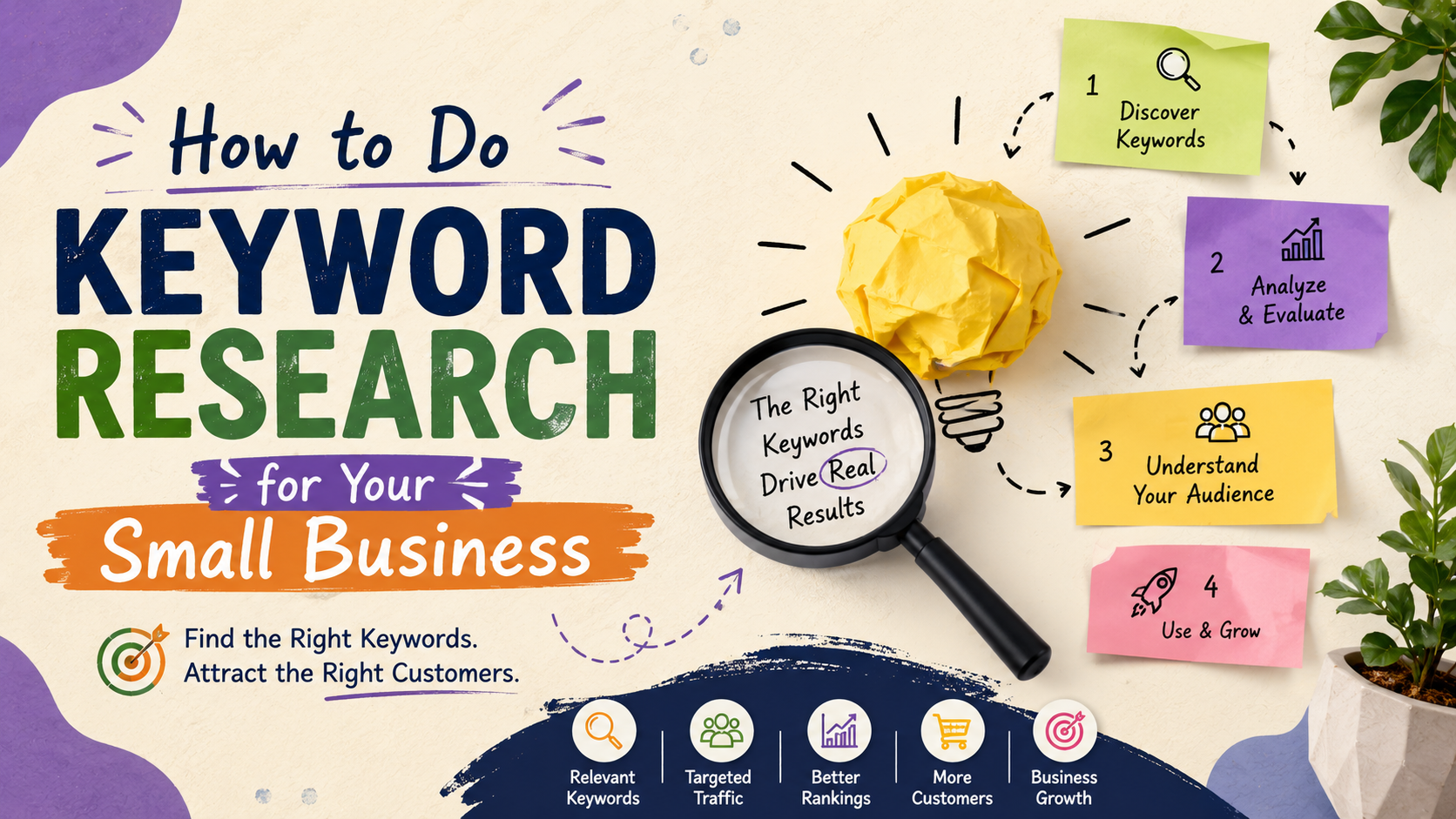
The next step is understanding one of the most important parts of SEO: keyword research.
What's Next?
In the next guide, we'll explain how keyword research works, how to find useful keywords for your business, and how to choose topics based on search intent.
Next: How to Do Keyword Research for Your Small Business
Build Your Digital Presence With C2D
At C2D (Concept to Deploy), we help businesses turn concepts into practical digital solutions through professional websites, SEO-focused content, and digital growth strategies.
Concept → Build → Optimize → Deploy → Grow.