How to Improve Your Business Website Conversion Rate | C2D Tech
Learn how to improve your business website conversion rate with better calls to action, page structure, trust signals, forms, content, and user experience with C2D Tech.
How to Improve Your Business Website Conversion Rate
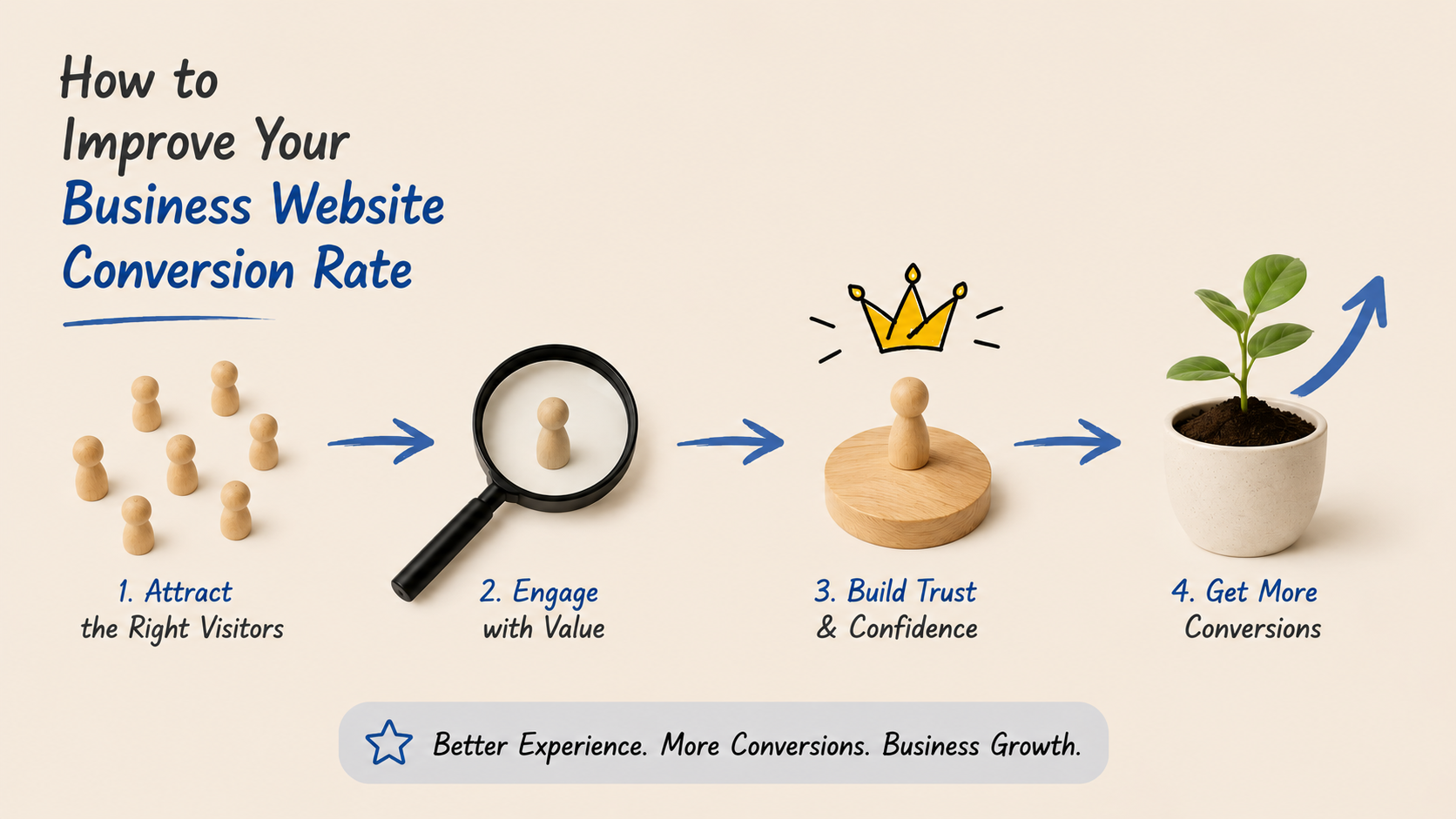
Getting visitors to your business website is important, but traffic alone does not guarantee business results.
A visitor may discover your website through Google, social media, an advertisement, or a referral and still leave without contacting your business or taking any meaningful action.
This is where website conversion rate becomes important.
Conversion optimization focuses on making it easier for visitors to complete actions that matter to your business.
These actions could include submitting a contact form, requesting a quotation, booking a consultation, making a purchase, calling your business, or signing up for an offer.
At C2D Tech (Concept to Deploy), we believe a successful business website should not only attract visitors but also guide them toward useful next steps.
In this guide, we'll explain what website conversion rate means, why it matters, what can prevent visitors from converting, and practical ways to improve your website's ability to turn visitors into potential customers.
What Is a Website Conversion?
A conversion happens when a website visitor completes a desired action.
The action depends on the purpose of your website.
For a service business, a conversion could be:
- Submitting a contact form
- Requesting a quote
- Calling the business
- Sending a WhatsApp message
- Booking a consultation
- Scheduling an appointment
For an e-commerce website, a conversion may be a completed purchase.
For a content website, it could be an email subscription or another valuable engagement.
What Is Conversion Rate?
Conversion rate is the percentage of visitors who complete a defined conversion action.
A simple formula is:
Conversion Rate = (Number of Conversions ÷ Number of Visitors) × 100
For example, if 1,000 visitors reach a website and 50 complete a desired action, the conversion rate would be:
5%
The appropriate conversion rate depends heavily on the business, industry, traffic source, offer, audience, and type of conversion.
Why Does Conversion Rate Matter?
A website can receive significant traffic without generating meaningful business results.
Improving conversion performance can help a business get more value from the visitors it already attracts.
For example, instead of focusing only on getting more visitors, a business can also ask:
- Are visitors finding the information they need?
- Do they understand what we offer?
- Can they easily contact us?
- Do they trust the business?
- Is the next step clear?
These questions can reveal opportunities for improvement.
Traffic and Conversions Work Together
Traffic and conversion optimization should not be treated as competing strategies.
A strong digital marketing system can look like:
Search → Website → Useful Information → Trust → Conversion
SEO and content marketing can help attract relevant visitors, while a well-designed website can help those visitors understand the business and take action.
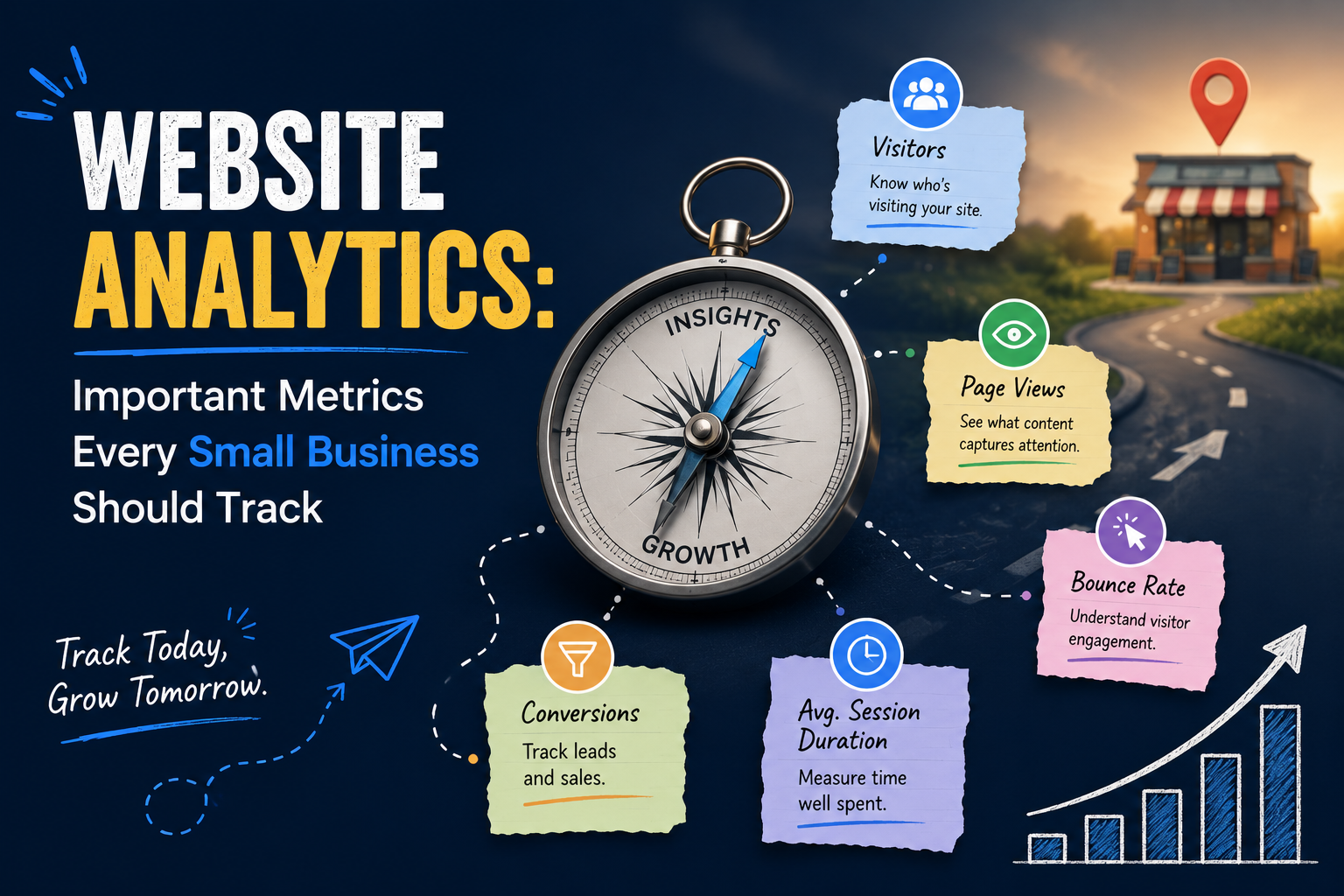
For more information about website analytics, read Website Analytics: Important Metrics Every Small Business Should Track.
1. Make Your Value Proposition Clear
Visitors should be able to understand what your business offers without having to search through the entire website.
Your homepage should clearly communicate:
- What your business does
- Who you help
- What problem you solve
- What makes your offer relevant
- What visitors should do next
A clear value proposition can reduce confusion and help visitors decide whether your business is relevant to them.
2. Use Clear Calls to Action
A call to action (CTA) tells visitors what they can do next.
Examples include:
- Request a Quote
- Contact Us
- Book a Consultation
- Get Started
- View Our Services
- Shop Now
- Schedule an Appointment
Your CTA should be relevant to the page and the visitor's likely intent.
Do not place multiple competing calls to action everywhere.
3. Place Important CTAs Where Visitors Can See Them
A call to action should be easy to find.
Important CTAs can appear in places such as:
- Hero section
- After important service information
- Near pricing information
- After trust-building content
- At the end of an article
- Contact section
The placement should feel natural rather than disruptive.
4. Make Your Website Easy to Navigate
If visitors cannot find the information they need, they may leave.
A clear navigation structure helps visitors move between important sections of your website.
Common navigation items may include:
- Home
- About
- Services
- Products
- Blog
- Contact
The exact structure should depend on your business and the amount of information your website contains.
5. Build Trust
Visitors may hesitate to contact a business if they are unsure whether it is legitimate, reliable, or capable of delivering what it promises.
Trust signals can include:
- Customer testimonials
- Reviews
- Case studies
- Portfolio examples
- Clear contact information
- Business information
- Professional website design
- Relevant certifications or credentials
Only use genuine claims and authentic customer feedback.
6. Show Real Examples of Your Work
If your business provides a service, visitors may want to see evidence of what you can do.
A portfolio or case study can help demonstrate your experience.
For example, a website development company could showcase:
- Website projects
- Before-and-after redesigns
- Industry-specific examples
- Project outcomes
- Client testimonials
7. Simplify Contact Forms
Long or complicated forms can discourage visitors from submitting an enquiry.
Ask only for information that is genuinely necessary at the first stage.
A simple form might request:
- Name
- Email or phone number
- Service required
- Short message
The ideal form depends on your business and sales process.
8. Make Contact Options Easy to Find
Visitors should not have to search for your contact information.
Depending on your business, consider making the following easy to access:
- Phone number
- Contact form
- Booking link
- Business address
This is particularly important for local businesses and service providers.
9. Improve Your Website's Mobile Experience
A significant number of visitors may access your website using smartphones.
If the mobile experience is difficult, visitors may leave before completing an action.
Check that:
- Text is easy to read
- Buttons are easy to tap
- Forms work correctly
- Images fit the screen
- Navigation is simple
- Pages do not require horizontal scrolling
For more information, read How to Make Your Business Website Mobile-Friendly.
10. Improve Website Loading Speed
Slow websites can create a poor user experience.
Visitors may leave before the page finishes loading, particularly when using mobile devices or slower connections.
Common areas to investigate include:
- Large images
- Unnecessary scripts
- Heavy animations
- Third-party resources
- Unoptimized code
- Hosting performance
For more information, read How to Make Your Website Load Faster.
11. Write Clear Website Content
Visitors should not have to decode complicated language to understand what your business offers.
Use:
- Clear headings
- Short paragraphs
- Simple explanations
- Useful examples
- Relevant images
- Specific service information
Good content can help visitors make informed decisions.
12. Answer Customer Questions
Potential customers often have questions before contacting a business.
Your website can answer common questions about:
- Pricing
- Process
- Timeline
- Services
- Availability
- Requirements
- Support
Providing these answers can reduce uncertainty and help visitors decide whether to take the next step.
13. Use Relevant Landing Pages
Different visitors may have different needs.
A dedicated landing page can provide information specifically related to a campaign, service, product, or audience.
For example, a business could create separate pages for:
- Website development
- SEO services
- Digital marketing
- Local businesses
- Specific industries
Each page should have a clear purpose and avoid unnecessary duplication.
14. Match Content With Search Intent
If visitors arrive from search engines, the page should match what they expected to find.
For example, someone searching for website development cost may expect pricing information or a detailed explanation of factors affecting cost.
If the page only contains a generic sales message, the visitor may leave.
Understanding search intent can therefore support both SEO and conversion optimization.
Learn more in How to Create SEO-Friendly Content That Ranks and Helps Readers.
15. Use Internal Links Strategically
Internal links can guide visitors toward relevant information.
For example, a blog article can link to a related service page.
A service page can link to a case study.
A case study can link to a contact page.
This creates a natural journey through the website.
16. Add Social Proof
Social proof can help visitors understand how other customers have experienced your business.
Depending on the business, this may include:
- Customer reviews
- Testimonials
- Ratings
- Case studies
- Client logos where appropriate
- Project results
Use genuine and verifiable information rather than exaggerated claims.
17. Reduce Unnecessary Distractions
A page with too many competing elements can make it difficult for visitors to decide what to do.
Review unnecessary:
- Pop-ups
- Animations
- Competing CTAs
- Decorative elements
- Long blocks of irrelevant information
A clean page can make the main action easier to understand.
18. Make Pricing Information Clear
Pricing can be an important factor in a customer's decision-making process.
If your business can provide pricing information, explain it clearly.
If the final price depends on project requirements, explain the factors that affect the cost and provide an easy way to request a quotation.
Avoid hiding important information simply to force visitors into contacting you.
19. Use FAQs to Reduce Friction
A well-designed FAQ section can answer common questions before visitors contact your business.
Useful FAQ topics may include:
- How the service works
- How long it takes
- What is included
- Payment options
- Support
- Requirements
FAQs should contain genuine questions and useful answers.
20. Test and Improve Your Website
Conversion optimization is not a one-time task.
Use analytics to identify pages that may need improvement and test reasonable changes.
For example, you could investigate whether changing:
- CTA wording
- Form length
- Page structure
- Headline clarity
- Trust signals
- Contact options
affects visitor behaviour or conversions.
Measure the results rather than assuming that a change worked.
How Analytics Helps Conversion Optimization
Analytics can help you identify where visitors may be dropping out of the conversion journey.
For example:
Traffic → Landing Page → Service Page → Contact Form → Conversion
If many visitors reach the service page but very few continue to the contact form, that page may deserve closer investigation.
Read Website Analytics: Important Metrics Every Small Business Should Track to learn more about measuring website performance.
Common Conversion Rate Optimization Mistakes
1. Focusing Only on More Traffic
More traffic is not always the answer. Relevant traffic and a strong user experience matter too.
2. Using Too Many CTAs
Multiple competing actions can confuse visitors.
3. Making Forms Too Long
Only request information that is necessary for the next stage.
4. Hiding Contact Information
Visitors should be able to find a way to contact your business easily.
5. Ignoring Mobile Users
A website that works well on desktop but poorly on mobile can lose potential customers.
6. Making Unsupported Claims
Exaggerated claims can damage trust. Use genuine information and evidence.
7. Changing Everything at Once
If you make many changes simultaneously, it can become difficult to understand which change affected performance.
8. Ignoring Data
Conversion optimization should be based on evidence and testing rather than assumptions alone.
Simple Conversion Optimization Checklist
- Define your main conversion goal
- Make your value proposition clear
- Use relevant calls to action
- Make CTAs easy to find
- Simplify important forms
- Display contact information clearly
- Build trust with genuine proof
- Show relevant work or case studies
- Answer customer questions
- Improve mobile usability
- Improve website speed
- Use relevant internal links
- Match pages with search intent
- Reduce unnecessary distractions
- Track conversions
- Test improvements
- Review results regularly
How C2D Tech Approaches Website Conversion
At C2D Tech (Concept to Deploy), we believe a business website should be designed around the visitor's journey.
A strong website should help visitors:
- Understand the business
- Find relevant information
- Build confidence
- Explore services
- Find answers to their questions
- Take the next step
We connect website structure, content, SEO, performance, and calls to action so that each part supports the overall business goal.
Final Thoughts
Improving your website conversion rate is not about using one magic design trick.
It is about understanding your visitors and making it easier for them to find information, trust your business, and take meaningful action.
Start by defining your conversion goal. Then review your website's value proposition, content, navigation, calls to action, forms, mobile experience, performance, and trust signals.
Use analytics to understand what visitors are doing and test improvements over time.
A website that attracts visitors and guides them toward meaningful actions can become a much more valuable part of your digital marketing strategy.
Continue Your Digital Marketing Journey With C2D Tech
You now know how to improve the conversion potential of your business website.
The next step is understanding how to build stronger trust with visitors through your website's design, content, credibility, and customer experience.
What's Next?
In the next guide, we'll explore how to build trust with your business website and the important elements that can help potential customers feel more confident about choosing your business.
Next: How to Build Trust With Your Business Website
Build Your Digital Presence With C2D Tech
At C2D Tech (Concept to Deploy), we help businesses turn concepts into practical digital solutions through professional websites, SEO-focused content, and digital growth strategies.
Concept → Build → Optimize → Deploy → Grow.