Website Analytics: Important Metrics Every Small Business Should Track
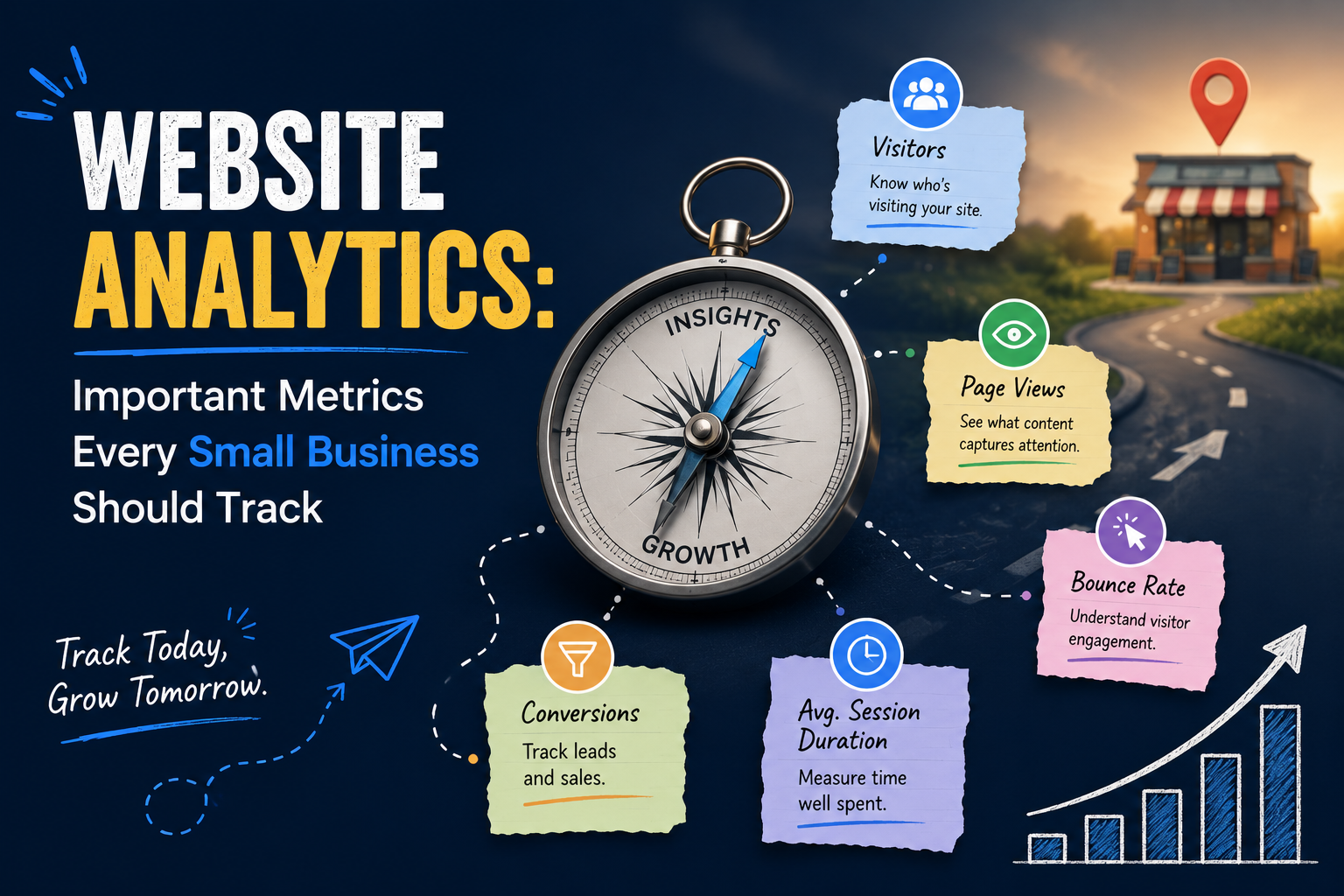
Learn which website analytics metrics small businesses should track, including traffic, engagement, conversions, leads, search performance, and user behaviour with C2D Tech.
Website Analytics: Important Metrics Every Small Business Should Track
Building a website is only the beginning of your online journey.
Once your website is live, an important question remains: Is the website actually helping your business?
Without data, it can be difficult to understand how people discover your website, which pages they visit, what they do after arriving, and whether your website is contributing to your business goals.
This is where website analytics becomes important.
Website analytics helps businesses understand how visitors interact with their websites and provides information that can support better decisions.
At C2D Tech (Concept to Deploy), we believe website performance should be measured using meaningful business outcomes rather than focusing only on traffic numbers.
In this guide, we'll explain what website analytics is, why it matters, which metrics small businesses should monitor, and how data can help improve your website and digital marketing strategy.
What Is Website Analytics?
Website analytics is the process of collecting and analyzing information about how people use a website.
Depending on the analytics platform and configuration, businesses may be able to understand information such as:
- How many people visit the website
- Where visitors come from
- Which pages they view
- How visitors interact with the website
- Which devices they use
- How visitors move through the website
- Which actions they complete
This information can help businesses identify what is working and where improvements may be needed.
Why Is Website Analytics Important?
Without analytics, businesses often have to rely on assumptions.
For example, you may think that a particular blog is bringing customers to your business. Analytics can help you investigate whether people are actually visiting that page and what they do afterward.
Website analytics can help you:
- Understand your audience
- Measure website traffic
- Identify popular pages
- Find traffic sources
- Understand visitor behaviour
- Measure conversions
- Identify potential problems
- Improve marketing decisions
Traffic Is Important, But It Isn't Everything
Website traffic is one of the most visible metrics, but it should not be treated as the only measure of success.
Imagine two websites.
Website A receives 10,000 visitors but generates only a few enquiries.
Website B receives 1,000 visitors and generates 50 qualified enquiries.
Which website is performing better?
The answer depends on the business goals, but the example demonstrates why traffic volume alone does not tell the complete story.
Businesses should look beyond visitor numbers and measure actions that matter.
1. Users and Visitors
The number of users or visitors can provide an overview of how many people are reaching your website during a particular period.
You can compare traffic across different time periods to understand whether your website audience is growing, declining, or remaining relatively stable.
However, different analytics platforms may define and calculate users differently, so always check how your chosen platform reports this metric.
2. Sessions
A session represents a period of interaction with a website.
Sessions can provide additional context around website activity.
For example, you might compare traffic before and after launching a marketing campaign to understand whether website activity changed.
3. Traffic Sources
Traffic sources help you understand how visitors arrive at your website.
Common sources can include:
- Organic search
- Direct traffic
- Social media
- Referral websites
- Paid advertising
- Email campaigns
Understanding traffic sources can help you evaluate different marketing channels.
4. Organic Search Traffic
Organic search traffic refers to visitors who discover your website through unpaid search engine results.
This metric can be particularly useful when you are investing in SEO.
If organic traffic increases over time, it may indicate that your website is becoming more visible for relevant searches.
However, traffic quality and conversions should also be considered.
To understand the relationship between SEO and search visibility, read How SEO Helps Your Business Website Rank on Google.
5. Top Landing Pages
A landing page is a page through which a visitor enters your website.
Knowing which pages attract visitors can help you understand which content or services are receiving attention.
For example, your most visited landing pages might include:
- Homepage
- Service pages
- Blog articles
- Product pages
- Location pages
These pages may deserve additional attention because they are important entry points into your website.
6. Most Viewed Pages
Page views can help identify which pages receive the most attention.
If one article consistently attracts visitors, you may be able to connect it to relevant service pages using internal links.
This can help readers discover additional information.
7. Engagement
Engagement metrics can provide insight into how visitors interact with your website.
Depending on the analytics platform, engagement measurements may include interactions such as:
- Page views
- Scroll activity
- Clicks
- Time-related engagement measurements
- Other configured events
Always understand what your analytics platform means by a particular engagement metric before drawing conclusions.
8. Average Engagement Time
Engagement time can provide an indication of how long visitors actively interact with your website or content.
For content-heavy websites, this can help identify whether visitors are spending time reading important pages.
However, longer time is not automatically better.
A visitor may spend a long time on a page because they are struggling to find information.
Use engagement metrics together with other data rather than interpreting one number in isolation.
9. Conversion Rate
Conversion rate measures the percentage of visitors who complete a desired action.
A conversion could be:
- Submitting a contact form
- Requesting a quotation
- Making a purchase
- Booking an appointment
- Calling the business
- Signing up for a newsletter
For a service business, enquiries may be much more important than raw visitor numbers.
10. Leads and Enquiries
For many small businesses, the number of qualified enquiries is one of the most useful website metrics.
For example, if visitors are contacting your business through:
- Contact forms
- Phone calls
- Booking forms
Tracking those actions can help connect website activity with potential business opportunities.
11. Device Type
Analytics can help you understand whether visitors are using:
- Mobile phones
- Desktop computers
- Tablets
This information is useful because website experiences can vary between devices.
If most of your visitors use mobile devices, ensuring that your website works well on smaller screens becomes particularly important.
For more information, read How to Make Your Business Website Mobile-Friendly.
12. Geographic Data
Depending on your analytics setup and privacy controls, you may be able to understand broad geographic information about your visitors.
This can be useful for businesses that serve particular cities or regions.
For example, a local business may want to understand whether its website is attracting visitors from the areas it actually serves.
Geographic information should be interpreted carefully and should not be treated as perfectly precise.
13. New vs Returning Visitors
Understanding whether visitors are new or returning can provide insight into how people interact with your website over time.
Returning visitors may indicate that people are coming back to read more content, compare services, or continue their decision-making process.
Again, the meaning depends on your business and website goals.
14. Exit Pages
Exit page data can show which pages were the last pages viewed during sessions.
A high number of exits from a page does not automatically mean the page is bad.
For example, a visitor may read a contact page and leave after finding the information they needed.
Use exit data together with other metrics to identify pages that may need investigation.
15. Search Queries and Search Performance
Website analytics and search performance tools can provide different types of information.
Search performance data can help businesses understand:
- Which searches lead to impressions
- Which queries generate clicks
- Which pages appear in search results
- How search visibility changes over time
This information can help improve your SEO and content strategy.
Keyword research can provide additional insight into the searches your target audience may use. Read How to Do Keyword Research for Your Small Business.
How to Set Meaningful Website Goals
Before measuring everything, decide what you want your website to accomplish.
Possible goals include:
- Generate leads
- Increase online sales
- Get more enquiries
- Increase bookings
- Build brand awareness
- Educate customers
- Increase organic traffic
Your metrics should support these goals.
Analytics for Service Businesses
A service business may care about metrics such as:
- Service page visits
- Contact form submissions
- Phone clicks
- Booking actions
- Organic traffic
- Traffic sources
For example, if a service page receives significant traffic but generates very few enquiries, it may be worth reviewing the page's content, trust signals, calls to action, and overall user experience.
Analytics for E-Commerce Businesses
E-commerce businesses may need to track additional metrics such as:
- Product views
- Add-to-cart actions
- Checkout activity
- Purchases
- Revenue
- Average order value
The exact metrics depend on the business model and analytics configuration.
Analytics for Local Businesses
Local businesses can pay particular attention to actions that connect online discovery with real-world business activity.
Examples include:
- Website visits
- Phone clicks
- Contact forms
- Directions-related actions
- Booking requests
- Local search visibility
For more information about local visibility, read Local SEO Guide for Small Businesses.
How to Use Analytics to Improve Your Website
Analytics becomes valuable when you use the information to make decisions.
For example:
Data → Observation → Hypothesis → Improvement → Measurement
Suppose an important service page receives many visitors but very few enquiries.
You might investigate:
- Is the service clearly explained?
- Is the call to action visible?
- Is the page easy to use on mobile?
- Are trust signals present?
- Does the page answer customer questions?
After making improvements, measure the results again.
Don't Focus on Vanity Metrics
Some numbers look impressive but may not directly represent business success.
For example, a large number of page views is useful information, but it does not automatically mean that the business is generating more customers.
Try to connect website data to meaningful outcomes.
For many businesses, this means paying attention to:
- Qualified leads
- Enquiries
- Bookings
- Sales
- Conversions
Common Website Analytics Mistakes
1. Tracking Everything Without a Goal
Collecting large amounts of data without knowing what you want to learn can create confusion.
2. Looking at Traffic Only
Traffic is useful, but it does not tell the complete business story.
3. Checking Data Without Taking Action
Analytics only becomes valuable when the insights lead to useful improvements.
4. Comparing Different Metrics Without Context
Metrics can mean different things depending on the platform, time period, website type, and business model.
5. Ignoring Mobile Visitors
If a large percentage of your audience uses mobile devices, mobile performance should be part of your analysis.
6. Expecting Immediate Results
Some website and SEO improvements may take time before their impact becomes visible.
Simple Website Analytics Dashboard
A small business does not necessarily need to monitor dozens of numbers every day.
A simple monthly dashboard could include:
| Metric | Why It Matters |
|---|---|
| Users | Shows overall audience size |
| Traffic Sources | Shows where visitors come from |
| Top Pages | Shows which content attracts attention |
| Organic Traffic | Helps evaluate search visibility |
| Conversions | Shows completed business actions |
| Leads | Connects website activity with opportunities |
| Device Type | Helps evaluate mobile and desktop experience |
How Content and Analytics Work Together
Content marketing becomes more effective when you measure how people interact with the content.
You can identify:
- Which articles attract visitors
- Which pages lead visitors toward services
- Which topics receive engagement
- Which content generates enquiries
This information can help you decide what topics to improve, expand, or create next.
For more information, read Content Marketing Strategy for Small Businesses.
How C2D Tech Approaches Website Analytics
At C2D Tech (Concept to Deploy), we believe analytics should help businesses make better decisions.
Instead of focusing only on impressive-looking numbers, we look at how website activity connects with real business objectives.
A strong measurement approach can connect:
- Website traffic
- SEO visibility
- Content performance
- User behaviour
- Conversions
- Leads
- Business goals
This creates a clearer picture of what is working and where improvements may be needed.
Website Analytics Checklist
- Define your website goals
- Set up appropriate analytics tools
- Track important traffic sources
- Monitor top landing pages
- Review popular pages
- Measure conversions
- Track leads and enquiries
- Review mobile and desktop usage
- Monitor important website actions
- Review search performance
- Compare meaningful time periods
- Identify improvement opportunities
- Test changes
- Measure the results
Final Thoughts
Website analytics gives businesses a clearer understanding of what happens after people arrive on their website.
Instead of guessing what works, you can use data to identify patterns, understand visitor behaviour, and make more informed decisions.
Start with your business goals, choose a small set of meaningful metrics, review them consistently, and use what you learn to improve your website.
Remember that the goal is not to collect the most data.
The goal is to collect the right data and use it to create better experiences and better business outcomes.
Continue Your Digital Marketing Journey With C2D Tech
You now know which website analytics metrics can help your small business understand website performance.
The next step is improving the performance of the website itself.
What's Next?
In the next guide, we'll explore how to improve website conversion rates, including calls to action, trust signals, page structure, forms, and other ways to turn more visitors into potential customers.
Next: How to Improve Your Business Website Conversion Rate
Build Your Digital Presence With C2D Tech
At C2D Tech (Concept to Deploy), we help businesses turn concepts into practical digital solutions through professional websites, SEO-focused content, and digital growth strategies.
Concept → Build → Optimize → Deploy → Grow.