What Is Digital Marketing? A Complete Guide for Small Businesses
Learn what digital marketing is, how it works, and how small businesses can use SEO, social media, content, email, and online marketing to grow with C2D.
What Is Digital Marketing? A Complete Guide for Small Businesses
Today, customers often discover businesses online before they ever contact them. They may search on Google, check social media, read reviews, watch videos, visit a website, or compare different businesses before making a decision.
This is why having a strong online presence has become increasingly important for businesses of all sizes.
But simply having a website or social media account is not enough. Businesses need a strategy for reaching the right people, communicating their value, building trust, and turning online visitors into customers.
This is where digital marketing comes in.
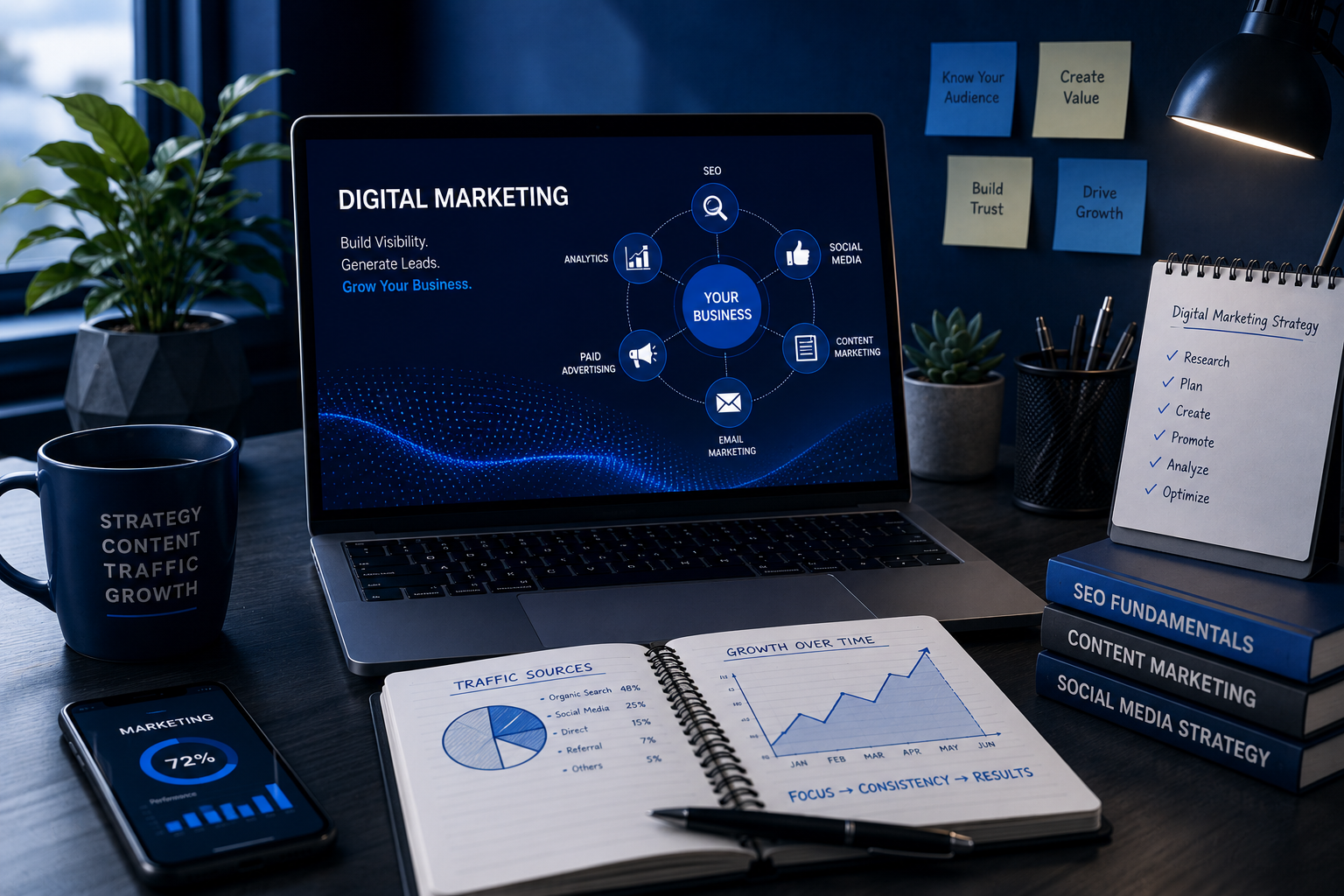
Digital marketing is the use of digital channels, platforms, content, and technology to promote a business, connect with customers, generate leads, and support business growth.
At C2D (Concept to Deploy), we believe digital marketing should begin with understanding a business, its customers, and its goals rather than simply posting content or running advertisements.
In this complete guide, we'll explain what digital marketing is, how it works, the major types of digital marketing, and how small businesses can use it effectively.
What Is Digital Marketing?
Digital marketing is the process of promoting products, services, or a business through digital channels.
These channels can include:
- Search engines
- Business websites
- Social media
- Online advertising
- Blogs
- Videos
- Online directories
- Messaging platforms
For example, when someone searches Google for a service and discovers your website, that can be part of digital marketing.
When someone sees your business on social media and visits your website, that can also be part of digital marketing.
The goal is to connect your business with the right audience through the digital channels that matter to them.
Why Is Digital Marketing Important for Small Businesses?
Small businesses often compete with larger companies for the attention of potential customers.
Digital marketing can help smaller businesses reach specific audiences, communicate their value, build trust, and create opportunities for new customers.
A strong digital marketing strategy can help a business:
- Reach new customers
- Increase brand awareness
- Generate enquiries
- Increase website traffic
- Build customer trust
- Promote products and services
- Generate leads
- Encourage repeat customers
However, digital marketing is not about being present on every platform. It is about choosing the channels that make sense for your business and using them effectively.
How Does Digital Marketing Work?
A simple digital marketing journey can be understood as:
Reach → Attract → Engage → Convert → Retain
Reach
First, people need to discover your business.
This can happen through:
- Google Search
- Social media
- Online advertising
- Referrals
- Online directories
- Content
Attract
Once people discover your business, your website and content should give them a reason to learn more.
Engage
Useful information, videos, social media posts, blog articles, and other content can help potential customers understand your business and what you offer.
Convert
The visitor then takes an action such as:
- Calling your business
- Sending an enquiry
- Booking an appointment
- Requesting a quote
- Making a purchase
Retain
Digital marketing does not end when someone becomes a customer.
Email, useful content, social media, customer service, and follow-up communication can help businesses maintain relationships with existing customers.
Types of Digital Marketing
Digital marketing includes several different channels and strategies.
The most important ones for many small businesses include:
- Search Engine Optimization (SEO)
- Content Marketing
- Social Media Marketing
- Email Marketing
- Local SEO
- Online Advertising
- Website Marketing
- Lead Generation
1. Search Engine Optimization (SEO)
Search Engine Optimization (SEO) is the process of improving your website and content so that search engines can better understand your pages and users can discover your business through relevant searches.
For example, imagine someone searches for:
website development company in Trichy
If your website provides useful information about website development and is relevant to that search, SEO can help your page become eligible to appear in search results.
SEO can involve:
- Keyword research
- Useful content
- Page titles
- Headings
- Internal links
- Image optimization
- Mobile-friendly design
- Website performance
- Technical SEO
- Local SEO
SEO works best when content is created to genuinely help people rather than simply trying to manipulate search rankings.
If you want to understand SEO in more detail, read How SEO Helps Your Business Website Rank on Google.
2. Content Marketing
Content marketing involves creating useful information that helps your target audience.
Content can include:
- Blog articles
- Guides
- Videos
- Images
- Case studies
- FAQs
- Social media posts
For example, a website development company could publish articles about website planning, website costs, SEO, mobile-friendly design, and website maintenance.
Instead of constantly telling people to buy a service, useful content answers customer questions and helps build trust.
3. Social Media Marketing
Social media marketing uses social platforms to help businesses reach and interact with potential customers.
Depending on the business, useful platforms may include:
- YouTube
- Other relevant social platforms
Social media content can include:
- Educational posts
- Product demonstrations
- Behind-the-scenes content
- Customer stories
- Offers
- Videos
- Business updates
The best social media platform depends on where your target customers actually spend their time.
4. Local SEO
If your business serves customers in a particular city or area, local SEO can be especially useful.
For example, a local business may want to appear when people search for relevant services in their city.
Local SEO can involve:
- Accurate business information
- Location-focused website content
- Business listings
- Customer reviews
- Local business information
Local SEO should focus on providing genuinely useful information to people in the areas your business serves.
5. Email Marketing
Email marketing allows businesses to communicate directly with people who have chosen to receive their messages.
Businesses can use email to share:
- New products
- Services
- Useful content
- Offers
- Announcements
- Business updates
A good email marketing strategy focuses on providing value rather than sending unnecessary messages.
6. Online Advertising
Online advertising allows businesses to promote their products or services through paid digital channels.
Depending on the platform, businesses may target audiences using factors such as:
- Search intent
- Location
- Interests
- Demographics
- Previous interactions
Paid advertising can help businesses reach potential customers quickly, but it should be connected to a clear business goal.
Generating clicks alone is not enough. The goal should be to generate meaningful actions such as enquiries, bookings, or sales.
7. Website Marketing
Your website is often the central destination for your digital marketing efforts.
Social media, search engines, advertisements, email, and other channels can send people to your website.
Your website should therefore make it easy for visitors to:
- Understand your business
- Learn about your services
- View your products
- Trust your business
- Contact you
- Take action
If you are planning your website, start with our guide on How to Plan Your Business Website Before You Build It.
Once your plan is ready, continue with How to Build a Professional Business Website Step by Step.
8. Lead Generation
Lead generation focuses on attracting potential customers and encouraging them to provide their contact information or take another meaningful action.
Examples include:
- Contact forms
- Quote requests
- Bookings
- Consultation requests
- Phone calls
- Email enquiries
Your website should make it easy for interested visitors to take the next step.
Digital Marketing vs Traditional Marketing
Traditional marketing can include newspapers, television, radio, billboards, brochures, and other offline channels.
Digital marketing uses online channels such as search engines, websites, social media, email, content, and online advertising.
Neither approach is automatically right for every business.
The best marketing strategy depends on:
- Your target audience
- Your industry
- Your location
- Your budget
- Your goals
- Your products or services
Some businesses may benefit from combining traditional and digital marketing.
How to Create a Digital Marketing Strategy
Before spending money on marketing, create a basic strategy.
Step 1: Define Your Business Goal
Decide what you want your digital marketing to achieve.
For example:
- More enquiries
- More website visitors
- More sales
- More bookings
- More local customers
- Greater brand awareness
Step 2: Understand Your Audience
Identify who your ideal customers are and what problems they are trying to solve.
Step 3: Choose the Right Channels
You do not need to use every digital marketing channel.
Choose the channels that are most relevant to your audience and goals.
Step 4: Create Useful Content
Develop content that answers questions, solves problems, demonstrates expertise, and helps customers make decisions.
Step 5: Measure Results
Track meaningful results such as enquiries, sales, bookings, conversions, and relevant website traffic.
Use these insights to improve your strategy over time.
Why Your Website and SEO Should Work Together
A digital marketing strategy becomes stronger when your website and other marketing channels support each other.
For example:
Social Media → Website → Service Page → Enquiry
Or:
Google Search → Blog → Service Page → Contact
Your website should provide the information and experience visitors need after discovering your business.
This is why website development, SEO, content, and digital marketing can work together as part of one larger strategy.
Common Digital Marketing Mistakes
Businesses can waste time and money when they approach digital marketing without a clear strategy.
Common mistakes include:
- Trying to use every platform
- Posting without understanding the audience
- Ignoring SEO
- Having a poor website
- Creating content without a purpose
- Focusing only on follower numbers
- Not tracking conversions
- Expecting instant results
- Ignoring existing customers
Digital marketing works better when every activity has a clear purpose and measurable goal.
How Long Does Digital Marketing Take to Work?
There is no universal timeline for digital marketing results.
Different channels work differently.
For example, paid advertising can potentially generate traffic quickly, while SEO and content marketing often require consistent work over a longer period.
Results can depend on:
- Competition
- Industry
- Audience
- Budget
- Content quality
- Website quality
- Marketing strategy
- Consistency
Businesses should be careful about anyone promising guaranteed rankings, instant success, or overnight growth.
How to Measure Digital Marketing Success
Do not measure your entire strategy using likes or followers alone.
Depending on your goals, useful measurements can include:
- Website traffic
- Organic search visibility
- Enquiries
- Leads
- Bookings
- Sales
- Conversion rate
- Email engagement
- Advertising performance
The right metrics depend on what your business is trying to achieve.
Digital Marketing Checklist for Small Businesses
- Define your business goals
- Identify your target audience
- Build a professional website
- Optimize your website for search
- Create useful content
- Choose relevant social media platforms
- Consider local SEO
- Build an email audience where appropriate
- Use paid advertising carefully
- Track meaningful results
- Improve your strategy over time
Why Digital Marketing Is a Long-Term Investment
A strong online presence is not normally built overnight.
Your website, content, search visibility, social media presence, customer relationships, and online reputation can become more valuable as they develop over time.
Instead of looking for one marketing trick, focus on building a system where different digital channels support each other.
How C2D Can Help Your Business
At C2D (Concept to Deploy), we believe digital growth starts with a strong online foundation.
That foundation can include:
- A professional website
- SEO-friendly structure
- Useful content
- Mobile-friendly design
- Fast website performance
- Clear calls to action
- Ongoing improvements
Our goal is to help businesses build practical digital solutions that support real business objectives rather than simply creating an online presence for the sake of it.
Final Thoughts
Digital marketing is much more than posting on social media or running advertisements.
It is a combination of strategies and digital channels that help businesses reach people, build relationships, generate leads, and grow.
For small businesses, the best approach is to start with a clear goal, understand the target audience, build a strong website, choose the right marketing channels, and measure what actually matters.
You do not need to do everything at once.
Build a strong foundation, improve it consistently, and let your digital marketing strategy grow with your business.
Continue Your Digital Marketing Journey With C2D
This is the beginning of our Digital Marketing & Online Growth series from C2D (Concept to Deploy).
In the next guide, we'll compare two important digital marketing channels and explain when businesses should focus on each one.
What's Next?
Now that you understand what digital marketing is, the next question is: which marketing channel should your business focus on?
In the next guide, we'll compare SEO and social media marketing, explain how they are different, and help you understand when each can be useful for your business.
Next: SEO vs Social Media: Which Is Better for Your Business?
Build Your Digital Presence With C2D
Have a business idea that you want to take online?
C2D (Concept to Deploy) helps businesses turn concepts into practical digital solutions through thoughtful website development, SEO-focused content, and digital growth strategies.
Concept → Build → Optimize → Deploy → Grow.